
Fiscal Year 2082/083 (2025/2026)
Organization: Sonrisa Nepal
Program: Educational Support and Protection Program for Chepang Children
Work Area: Rapti Municipality, Wards No. 11 and 13, Chitwan District
Reporting Period: Fiscal Year 2082/083 (2025/2026)
Sonrisa Nepal is a non-profit social organization that has been continuously serving vulnerable children and disadvantaged communities in Nepal for the past 19 years. Since its establishment, the organization has worked to improve access to education, child protection, health, and better living conditions for children and families facing poverty and social disadvantage.
During its first 19 years, Sonrisa Nepal operated a residential children's home, providing a safe home, care, and educational opportunities for 20 children, most of whom were orphaned, conflict-affected, or otherwise disadvantaged. Through long-term support and guidance, except few all children successfully completed their education up to Grade 12 and have since been successfully reintegrated into society as independent and responsible young adults. This achievement reflects the organization's long-standing commitment to transforming children's lives through education, care, and compassion.
Building on this experience, Sonrisa Nepal has now expanded its mission from residential care to community-based educational support. The organization believes that supporting vulnerable children within their own families and communities creates a more sustainable and inclusive approach to child development.
During Fiscal Year 2082/083 (2025/2026), Sonrisa Nepal launched the Educational Support and Protection Program for Chepang Children in Wards No. 11 and 13 of Rapti Municipality, Chitwan District. The program focuses on improving educational opportunities for children from one of Nepal's most marginalized indigenous communities by providing essential educational materials and reducing the financial burden on their families.
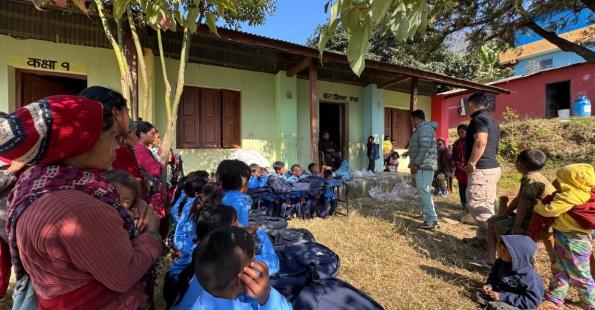
During this reporting period, the program directly supported 39 Chepang children through the distribution of school uniforms, shoes, stationery, school bags, where required, and seasonal clothing. Beyond providing direct assistance, the program also provided valuable lessons that will guide the expansion of the program in the coming years.
The main objectives of the program were:
During Fiscal Year 2082/083, Sonrisa Nepal directly supported 39 Chepang children studying in schools within Wards No. 11 and 13 of Rapti Municipality.
The beneficiary children were selected in consultation with school principals, teachers, families, and members of the local community, with priority given to children facing significant economic hardship.
Thakal Tar Secondary School, Rapti, Chitwan
Hati Sude Basic Primary School
Harra Bisauni Basic Primary School
Washbang Basic Primary School
Total Direct Beneficiaries: 39 Children
During Fiscal Year 2082/083, Sonrisa Nepal distributed educational and personal support materials in two phases.
Depending on individual needs and available resources, the following items were provided:
Before distribution, the needs of the children were assessed in coordination with school principals, teachers, families, and members of the local community. This helped Sonrisa Nepal direct the available resources towards children with the greatest need.
During Fiscal Year 2082/083, 39 Chepang children directly received educational support through Sonrisa Nepal.
The provision of school uniforms, shoes, stationery, bags, and seasonal clothing helped children who might otherwise have struggled to obtain these basic necessities. Feedback from teachers indicated that such assistance can contribute positively to children's enthusiasm for attending school and participating in their education.
However, one of the most important lessons from this year's program came during the distribution itself.
The 39 selected children received substantial support, including multiple items of clothing and a good supply of school stationery. While these children were very happy and grateful to receive the assistance, we also observed many other children attending the same schools who received no materials.
Many of these children appeared to be living in similarly vulnerable circumstances. Seeing some classmates receive several items while they received nothing was difficult, and some of the children appeared understandably disappointed.
This experience encouraged Sonrisa Nepal to reconsider how the available resources could be distributed more inclusively.
Following discussions with teachers and school representatives, we found that they shared the same concern. Rather than providing several sets of clothing and larger quantities of materials to a smaller number of selected children, it may have a greater overall impact to provide one essential set, or two sets where resources permit, to every child in the participating schools.
This approach would allow more children to benefit, reduce feelings of exclusion among equally vulnerable students, and help ensure that children have the basic clothing and educational materials they need to attend school with confidence.
This experience has become an important lesson for Sonrisa Nepal and has directly influenced our planning for the next fiscal year.
The program also faced several challenges:
The experience highlighted that educational hardship is not limited to a small number of selected children. Many children attending these schools face similar challenges.
Based on our experience during Fiscal Year 2082/083 and discussions with teachers and school representatives, Sonrisa Nepal plans to expand the educational support program to approximately 150 children in the participating schools during the next fiscal year, subject to available funding and resources.
Previously, our approach was to provide more extensive assistance to 39 selected children. This often included two or three items of clothing, along with a substantial set of stationery and other school materials.
Although this support was valuable for the selected children, we learned that many other children in the same schools were living in similarly vulnerable circumstances but received no assistance.
For the coming year, we therefore plan to adopt a broader and more inclusive approach.
Instead of concentrating several sets of materials among a smaller number of children, Sonrisa Nepal aims to provide each child with a basic package of essential educational support. Depending on available funding, this may include:
By distributing available resources more widely, we hope to reach approximately 150 children and ensure that children attending the same schools have a more equal opportunity to benefit from the program.
Teachers have also encouraged this approach, as providing basic educational materials to all children may help create a stronger sense of inclusion and belonging within the school community.
Most importantly, we hope that having a school uniform, stationery, and other basic materials will encourage children to attend school regularly, participate with confidence, and continue their education.
In addition to expanding educational material support, Sonrisa Nepal plans to:
The Educational Support and Protection Program for Chepang Children has provided Sonrisa Nepal with both encouraging results and valuable lessons.
Through this program, 39 children directly received educational assistance, helping them attend school with greater confidence and dignity. More importantly, the experience highlighted that many more children within the participating schools face similar challenges.
As a result, Sonrisa Nepal has committed to expanding the program to approximately 150 children in the coming fiscal year, subject to available funding and resources. By distributing educational support more equitably, we hope to ensure that every child has the opportunity to attend school with the basic materials they need to learn and thrive.
Sonrisa Nepal remains committed to promoting education, child protection, and equal opportunities for vulnerable children. We believe that investing in children's education is one of the most effective ways to create lasting change for families and communities.
Sonrisa Nepal extends its deepest gratitude to all our donors, specially those from abroad, as well as our volunteers, partners, schools, teachers, local communities, and well-wishers who have supported our mission from the very beginning. Your generosity, trust, and unwavering commitment have made it possible for us to support vulnerable children through education, care, and protection over the past 19 years.
Thanks to your generous support, Sonrisa Nepal was able to provide a safe home, care, and education for 20 children, most of whom were orphaned, conflict-affected, or otherwise disadvantaged through our residential children's home. Except for a few, all these children successfully completed their education up to Grade 12 and have now been reintegrated into society as independent and responsible young adults. This remarkable achievement would not have been possible without your compassion and long-term commitment.
Today, your continued support has enabled us to begin a new chapter through our Educational Support and Protection Program for Chepang Children. Every school uniform, pair of shoes, notebook, school bag, and other educational materials distributed to vulnerable children has been made possible because of your kindness. Your generosity has not only helped children attend school but has also given them hope, confidence, dignity, and the opportunity to build a brighter future.
As we expand this program to reach approximately 150 Chepang children, we sincerely hope that you will continue this journey with us. With your ongoing partnership, we can reach even more vulnerable children, help them remain in school, and provide them with the opportunities they deserve.
Together, we believe that education has the power to break the cycle of poverty and create lasting change for children, their families, and their communities.
On behalf of every child whose life has been touched by your generosity, thank you for believing in our mission and making this work possible. We look forward to continuing this journey together and creating an even greater impact in the years ahead.
Prepared by:
Sonrisa Nepal
Ward No. 4, Sim Kirtipur Municipality, Kathmandu
Fiscal Year 2082/083 (2025/2026)
2016 PAcom.np || All Rights Reserved || Terms & Conditions
Powered By: Ultrabyte

